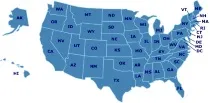
Local & State Resources
local and state resources…
What's Popular
Home is Cool: Get Organized for Home School
Homeschool families, like Tolstoy’s happy ones, are all alike: drowning in a sea of clutter. Home schooling a child beats all other organizational challenges hands-down. How do you count the clutter? The books. The papers. The biology experiments on the kitchen window. The six-foot-tall child sprawled on the floor, reading. The record-keeping. College admissions and testing and letters from the correspondence school.
Socialization is a Bunch of Malarkey
Most folks who ask about socialization mean well. They are not plotting against us, but they are uninformed. But modern socialization in schools is not natural or desired. The best response is one that offers a gentle attempt to enlighten questioners about the wonderful world of homeschooling.
5 Great Pre-K Math Activities
Giving children a foundation to build number sense is very important. Learning might as well be fun to help kids build a great outlook on math, as they grow older. Here are five fun Pre-K math activities that build number recognition and counting skills.
Ben and Me
Marcy shares her life with her son Ben, an adopted only child, who she is homeschooling.
Math For Life
MathForLife is an email group that offers a forum to share math questions and math resources. It is an open group for those people who would like to learn to love math and use math well. It is especially for parents who want to home-school or after-school their children in math.
Parents Educating at Home (PEAH)
Parents Educating at Home (PEAH) has as its goal to network with businesses and organizations to raise the awareness of home schooling in the community. They work to manage and communicate discounts and savings that home schooling families can receive as well as continually work to obtain additional discounts both nationally and locally on behalf of the homeschooling community. In order to become a member, you must pay a fee.
Homeschooling - ERIC Digest
This Digest discusses the extent of contemporary homeschooling and its legal status, describes available resources, presents evidence on the performance of homeschoolers, and notes how public opinion regarding the practice has changed over time.
Developmental Milestones for Preschool Mathematics
Children’s ability to understand mathematics takes a big leap forward in the preschool years. Their strengthening ability to represent using manipulatives, symbols, and signs opens up many new possibilities. Children also make strides in algebra and patterning. They can sequence events in time by age three. By age four, they can re-create patterns or make their own repeating pattern. During the preschool years, the child’s ability to problem solve takes on a new zeal. Children’s ability to classify objects is more developed; they can sort and organize objects into different categories and tell which pile has more. This chart details the skills that children can exhibit at different ages.
The Big Clean Up
Stacy DeBroff shares 15 favorite get-organized secrets, allowing you to declutter with ease.
Learning Styles and Hemispheric Dominance—Right or Left Brain: Which is Dominant in Your Family?
This is part two of a set of articles discussing learning styles and hemispheric dominance. Here Karen M. Gibson focuses on the theory of right-brain/left-brain dominance and some of the research and theories surrounding this concept. She also details some strategies for learning in response to understanding your child's natural patterns and styles of learning.